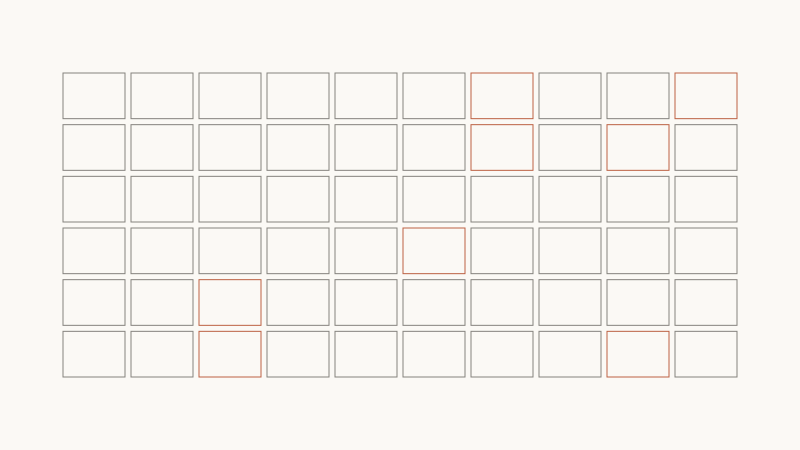
The vacancy rate in Brisbane is sitting near one percent, which if you haven't spent time thinking about vacancy rates, is about as tight as a rental market gets before something has to give.
Population growth is doing most of the work here. Interstate arrivals, international students back in force, professionals relocating for jobs that didn't exist in this city five years ago. All of them need somewhere to live, and somewhere to live isn't being built fast enough to keep up.
Rents are climbing accordingly. One-bedroom apartments especially, co-living spaces too, anything well located and reasonably modern. If you're locking in a property now, you're likely catching both the rental upside and whatever capital growth comes with it.
There's real demand building for the affordable, well-located end of the market. Students, single renters, young professionals, all looking for something within half an hour of the CBD that doesn't require winning a bidding war. Studios and dual-living setups are quietly becoming some of the smarter plays.
A few areas worth watching. 1B class residential, dual living, co-living, all producing strong yield without the operating costs blowing out. Short-term leasing near the big developments, Queen's Wharf especially, can outperform standard long-term leases if you're willing to manage it more actively. And the outer suburbs, Chermside, Wavell Heights, Mount Gravatt, Acacia Ridge, filling up fast because they're affordable and still close enough to matter.
None of this is risk-free. Regulations shift. Rates move. And if enough supply comes online in the right pocket, rents could soften faster than anyone's modeling right now.
But the underlying story, tight vacancy, real population pressure, a genuine housing shortfall, isn't going away on any timeline I can see.